Refugees I've Known: My Afghan Family

My partner and I were visiting my grandparents in their new little apartment in a retirement community in Coastal Maine. Grandpa took us on a tour of his wedding photos, his medals from the South Pacific, his brother’s paintings and his own stained glass. We stopped in front of a collage of snapshots from the late Eighties.

“Hey, that’s Fakhria!” I said.

“Yes, it is.” Turning to my partner, Grandpa said, “You probably don’t know that in the Seventies we had an Afghan student live with us for a year named Fakhria. That was the year Maryah’s mother was in high school.” She’s the youngest of three sisters. “Fakhria lived with us for a year, and then she went back to Afghanistan. Now she lives in Virginia.”

He led us out into the little hallway, showing us Fakhria’s Senior portrait, and I heard something in his voice that I hadn’t noticed before. I know that family is important to him and Grandma. “They’re the only people who were there with you from the beginning and will be there till the end,” she always says. I know that Grandpa is proud of his daughters and their families. What I heard in his voice that afternoon was that he loved Fakhria as much, was as proud of her accomplishments as of his own girls.
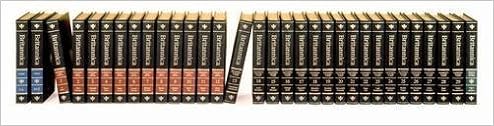
I grew up hearing stories about Fakhria. When my mother’s family first found out where their exchange student would be coming from, Mom says, they knew nothing about Afghanistan. “We looked it up in the encyclopedia, and the entry for Afghanistan was less than an inch long. That was all we knew.” Fakhria came with Afghan embroidery, Afghan clothing. She taught my mother’s family about her country, about Islam.

"Trusting Sayf"

“Do you trust me?”

I stared at the text message. I had known Sayf, an Egyptian refugee aid worker by day and photojournalist by vocation, for almost a year. In my first months in Cairo, we had run into each other often at parties thrown by mutual friends in the Fulbright Program that neither of us were part of. The Fulbright Scholars were long gone, evacuated months ago when the revolution broke out on Tahrir Square. I hadn’t seen Sayf much since then, but we had been saying for weeks that we should get coffee and catch up before I left Cairo at the end of the month.

“I’m getting paid on Saturday for some work I did for Der Spiegel.” Sayf’s German was as beautiful and natural as his English, something we had in common. “I have a tradition when I get paid, something I like to do with a friend. Do you trust me?”

I thought about Paul, the tall, geeky younger guy in my Egyptian politics class. I had been lusting after him all year. The last time Paul had said, “Trust me,” I didn’t. He and some other classmates apparently ended up in a cabaret bar full of Russian prostitutes. They said they had a fun time, but I was glad I hadn’t gone along.
After more than 20 years of hard work,
I'm finally getting my first piece of fiction published!

When I arrived in Cairo, it was an almost inconceivably other world, where I was visibly and emotionally the alien other, known colloquially as a 'khawaaga.' This story is fictional, but its heart arises from the very real feeling of being khawaaga I experienced in Egypt, and my unfinished journey towards becoming something in between.

It was perfect for the magazine Newfound, which explores how place shapes identity, imagination, and understanding, for an issue on the theme of "other worlds." They thought so, too, and you can read the whole story online.


I found this publishing opportunity through the Duotrope Weekly Wire email.
Duotrope: an award-winning resource for writers

An Open Letter From 2,600+ Returned Peace Corps Volunteers

A month ago, a proud community of more than 225,000 Returned Peace Corps Volunteers - who have served our country and world by working with, learning from, and living among people in 141 countries since 1961 - signed an open letter to one of the countries we love, the United States.

I just found out about this today, but if I had known sooner, you would have seen me as approximately #1769!
Seriously, though, in my time in Jordan as a Peace Corps Volunteer, I was warmly embraced as a teacher, a learner, a sister, a daughter, an aunt, a friend, a neighbor....

Refugees I've Known: Mokhtar's Cairo

I rarely felt comfortable in the streets of Cairo, and I quickly came to associate this feeling with an Egyptian word: khawaaga. It described how I felt when I walked down my street, Tahrir Street, an important thoroughfare linking my Bab-al-Luq neighborhood in Cairo proper with Giza across the Nile. Lined with tourist traps from restaurants to souvenir shops, walking down my street was a gauntlet of leers and come-ons from shopkeepers, street vendors, beggars and young men in search of a good time. I always went armored with big sunglasses and one earbud in — still able to listen to my surroundings, but enough of a distraction to keep my angry inner monologue from spiraling out of control.

 
My apartment on Tahrir Street was a refuge, with a revolving door of expat roommates. There was Pip from Australia, doing a gap year internship before law school, and her friend Sylvia, an Italian journalist who crashed briefly on our couch. Then Pip took off for some extended vacations to Ethiopia and across Europe, and while she was gone, Mokhtar stayed in her room.

Tall, slender, soft-spoken, he had come to the United States with his mother and several siblings as refugees from the Somali famine in the early 1990s. Now he was a Fulbright Scholar, studying food and agricultural politics in Egypt and the Horn of Africa. In the months before he moved in, Pip, Mokhtar and I spent quite a few nights at a little street café on tiny pedestrian Al Mahrani Street a couple blocks from the apartment, sipping little cups of coffee or glasses of tea with mint, balanced on rickety little metal tables, he and she puffing away at a sheesha.

We were often joined by friends of his, other Fulbright Scholars and Egyptian university students and young journalists. They would point at other unsteady little tables and tell about this well-known leftist and that provocative artist who were also sipping tea and sheesha with their friends.

To the Women Who Inspire Me

This International Women's Day, I raise my mug to the women and other femmes — internationally! — who inspire me.

To the woman who raised and taught me ... and the woman who raised her, and the woman who raised her....

To Fakhria, my first Muslim hero....

To the strong, outspoken, relentless women — Miss Chris, Miss Lois, Miss Jessie, Mrs. Yeater, Miss Gina, Miss Sue, Miss Jeanette, Miss Laurie, Rev. Lisa.... — who supported, encouraged and laughed loud and long with my mother....

To the teachers, especially Miss Stolzfus, Mrs. Keller, Mrs. Pettijohn, Mrs. Murphy, Mrs. Anderson, Frau Blechschmidt, and most especially Mrs. T, who pushed me to be the best me....

Refugee Legacies: William Penn

Quaker, Activist, Religious Libertarian

Not everyone knows the story of William Penn, but growing up in Pennsylvania, we took a long, deep look at the legacy he imparted, including the very first guarantee of religious liberty in these United States. Perhaps it appealed so strongly to me because Pennsylvania was never a place of religious liberty for me and my family - not in my school district! - and Penn's dream painted a picture of what I wished my home state were.

William Penn, the second of his name, was a British Admiral's son, kicked out of Oxford University for participating in protests over the firing of a professor he admired. Later, he twice dropped out of law school. Young Penn came to admire the Quakers he saw, a new branch of Protestant Christianity that spoke of a divine inner light in all people, and who were arrested by police and demonized by Anglicans and Puritans for their acts of charity and mercy during the London plague of 1665.

After becoming a Quaker at 22, William was repeatedly jailed for his theological writings opposing Catholic, Anglican and Puritan practices alike.

English law being primarily case law dependent on precedents established by the courts, Penn also deliberately provoked the legal establishment by staging public activities meant to test the limits of the law, such as the 1664 Conventicle Act that restricted freedom of assembly. He was frequently arrested and often on trial. In one case, the entire jury was imprisoned alongside young William because they refused to find him guilty, a precedent for the jury nullification and habeas corpus practices that exist in British and American law to this day.

My prison shall be my grave before I will budge a jot: 
for I owe my conscience to no mortal man.

Refugees I've Known: The Iraqi Boyfriend

I don't remember his name. For years, I've referred to him as Ali.

When I was seventeen, I decided that world peace was within my grasp. (You know how seventeen can be.) Two trips up into the Swiss Alps provided my inspiration.


It started over a Raclette dinner in Zermatt in December, 1998. All the country's Rotary Exchange Students had gathered from across the two Rotary districts of Switzerland. It would be the last such bi-monthly gathering for the students from the southern hemisphere. My American friends and I had been watching them enviously since we arrived in August. The Aussies, the Kiwis, the South Africans, the Brazilians and Chileans.... Someday, we told ourselves, when we were in the second half of our magical year of youth exchange, we would be such brash, bold, fascinating people, just as comfortable in our own skins, right? (Not necessarily.)

After dinner, all the outgoing students gave three to five minute speeches about a particular aspect of their year abroad, in the language of the community they had lived in, which was universally German. The subject of perhaps the fifth little speech was the Eurotour, and that was when my Thai friend Bow, who was living in Geneva, leaned towards me. "I want to know about this," she said in English. "I'm still deciding whether to go. Do you think you can tell me what they're saying?"

Refugees I've Known: Prof. Dawit

Lessons in Peace, Agency, Beer and Food


The capstone of Goucher College's Honors Program is a multidisciplinary senior seminar. In the Spring 2003 semester, six professors divided up the semester between them. We spent two weeks learning about post-colonialism through the lens of sugar with a book like this one, spent another two weeks reading a fascinating dissertation about math and philosophy ... and joined a Peace Studies course for two weeks, taught by a new faculty member, Prof. Seble Dawit.

An article in the Baltimore Sun a year after I graduated highlighted Goucher's Peace Studies minor, which has since become a major.
"Conflict is not the problem," says the human rights lawyer, whom Goucher hired three years ago to create a major in the field. "The problem is continuing human reliance on incredible and often catastrophic violence as a means of resolving conflict."
I remember Seble as a short, compact, lively woman with a big smile and a fascinating life, from Ethiopian refugee to an academic comfortable with controversy in defense of African self-determination.

Refugees I've Known: Prof. Thormann

Dr. Wolfgang E. Thormann died at the beginning of the year,
a long, admirable life of 92 years.

It had been a decade since I had seen him last, but his obituary in my Newsfeed was a strike to the chest.

At Goucher College, where I was a freshman in 1999, I declared a German minor. I had just returned from Rotary Youth Exchange in Bern, Switzerland, where I attended gymnasium, became fluent in High German, and forgot half of it again in my last three months when I decided to learn the Bernese dialect instead. I took the German placement exam, and tested into German 103, which I knew was probably a mistake, so I made an appointment with Goucher's only German professor, Dr. Uta Larkey. I introduced myself, in German, of course, and started to tell my story. Forty-five minutes and lots of laughter later, she said, "I forbid you to take any class below the 300-level. You're too good. You'll scare away all my students."

Where I'm Giving Energy

I told you where I'm spending money to put my values in action, and I promised you a post about the things I'll be doing in the world to make it a better place. This is it.

These are my approaches to living my values in the world. This is not a comprehensive list of your possibilities, and should not imply that you should do all or any of these. There are lots of these lists on Internet to choose your own activism from.

Going to Work
After the election, after the inauguration, after the Executive Orders and protests of the first couple weeks, I am prouder than ever to be working as a grant writer for Neighborhood Trust Financial Partners. Our work, providing low-income people with financial skills and access to the formal financial system, serves a client base that is overwhelmingly women, People of Color, immigrants, and concentrated in two of the lowest-paying, fastest-growing sectors of the post-crisis economy, health care and retail, where wages are actually declining. 70% of Americans depend on government assistance, 42% of American workers make less than $15/hr, 69% of mothers and 79% of fathers see their hours fluctuate up or down as much as 40% from week to week, and for these people, things are only going to get worse.

No matter what else happens, whether anything else I do makes an impact, going to work every day is fighting back. I consider myself very lucky that in the balancing act between civic action and getting paid, I can feel good about going to work. I recommend thinking now about how the scales level out on that in your life. And if you have to go to work because it puts food on your table more than for the good of the world, don't feel guilty. Your household comes first.

Caring for myself is not self-indulgence,
it is self-preservation, and that is an act of political warfare.
--audre lorde
